Garage and Basement Floors That Hold Up to Daily Use
Residential Epoxy Flooring in Williamston for slabs with moisture concerns, tire wear, and surfaces that have resisted previous coatings
A coated floor that peels within a year almost always fails for one reason: moisture in the slab was not tested before the coating went down. Liquid Flooring, LLC builds moisture testing into every residential epoxy project in Williamston before grinding begins, which changes what coating system gets selected and how thick the base coat needs to be. Garages and basements in this area—particularly homes with large attached garages built in the 1980s and 1990s—often carry slabs that move moisture seasonally, and skipping that test is the most common reason a residential epoxy job fails early.
Once moisture levels are confirmed, the concrete is ground to open the surface profile so the epoxy bonds mechanically rather than relying on adhesion alone. The owner can show the finished look before any material goes down, and three quote options are available so the scope can be matched to the project. Discounts are offered for local customers in the Williamston area.
Arrange a floor evaluation to confirm moisture levels and identify what surface preparation your slab requires before work begins.
What Proper Residential Epoxy Installation Requires
Grinding and moisture testing are not optional steps that can be skipped to reduce cost—they are the steps that determine whether the coating stays down. Liquid Flooring, LLC handles both in-house as part of every residential installation. The grinding opens the slab to the correct surface profile, and the moisture reading determines whether a standard epoxy system is appropriate or whether a moisture-tolerant primer is needed first.
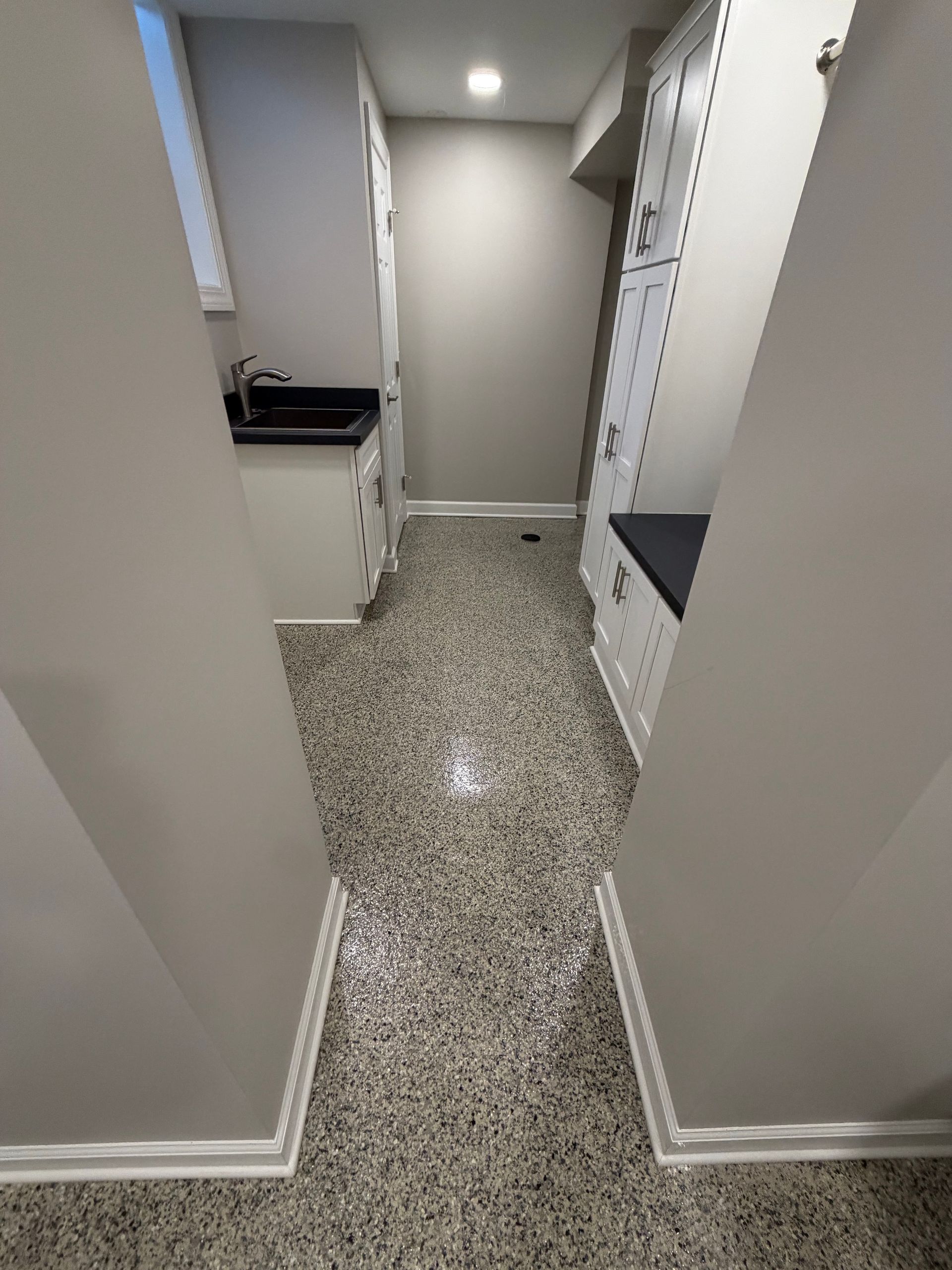
After installation is complete, the floor presents as a fully sealed, cleanable surface. Tire marks wipe off rather than embedding into the concrete, and oil or fluid spills sit on top of the coating rather than soaking into the slab. In finished basements, the surface reads as a smooth, consistent floor rather than bare or stained concrete.
Homes in the Haslett area with older attached garages frequently have slabs that were originally poured without vapor barriers, which means moisture testing is especially important before selecting a coating system. The approach to those slabs is different from a newer pour, and recognizing that difference before the coating goes down is what separates a floor that lasts from one that does not.
What Homeowners Ask About the Work
These questions reflect what comes up most often when homeowners are deciding whether residential epoxy flooring is the right fit and how the installation actually works on a residential slab.
Why is moisture testing done before grinding rather than after?
Moisture readings taken before grinding reflect the baseline condition of the slab, and that information drives the choice of primer and coating system—testing after grinding can give a different reading because the surface has been opened.
What does grinding the concrete actually do to prepare the surface?
The grinder removes laitance, old sealers, and surface contamination while creating a mechanical profile—a slightly rough texture the epoxy can grip—so the coating bonds to the concrete rather than sitting on top of it.
How does the age of the slab affect which coating system is selected?
Older residential slabs are often softer and more porous than slabs poured in recent decades, which means they absorb primer differently and may require a heavier base coat to fill the surface before the topcoat goes down.
What should be done to prepare a garage for an epoxy installation appointment?
The floor should be cleared of vehicles, storage, and any items sitting directly on the concrete, and any oil stains should be noted so the crew can assess whether degreasing is needed as part of surface preparation.
How can a homeowner tell whether a finished epoxy floor was properly installed?
A correctly installed floor will show no bubbles, peeling edges, or areas where the coating looks thin or uneven—run your hand across the surface and the texture should feel consistent, with no soft or hollow-sounding spots when tapped.
Liquid Flooring, LLC also installs residential epoxy flooring in Lansing, Okemos, East Lansing, Mason, and Howell. To discuss your garage or basement floor and get a quote based on what the slab actually needs, call Liquid Flooring, LLC at (734) 686-9399.