Durable Flake Floors That Conceal Wear Patterns
Flake Epoxy Flooring in Williamston for garages, basements, and commercial spaces where surface marking and spill cleanup are daily concerns
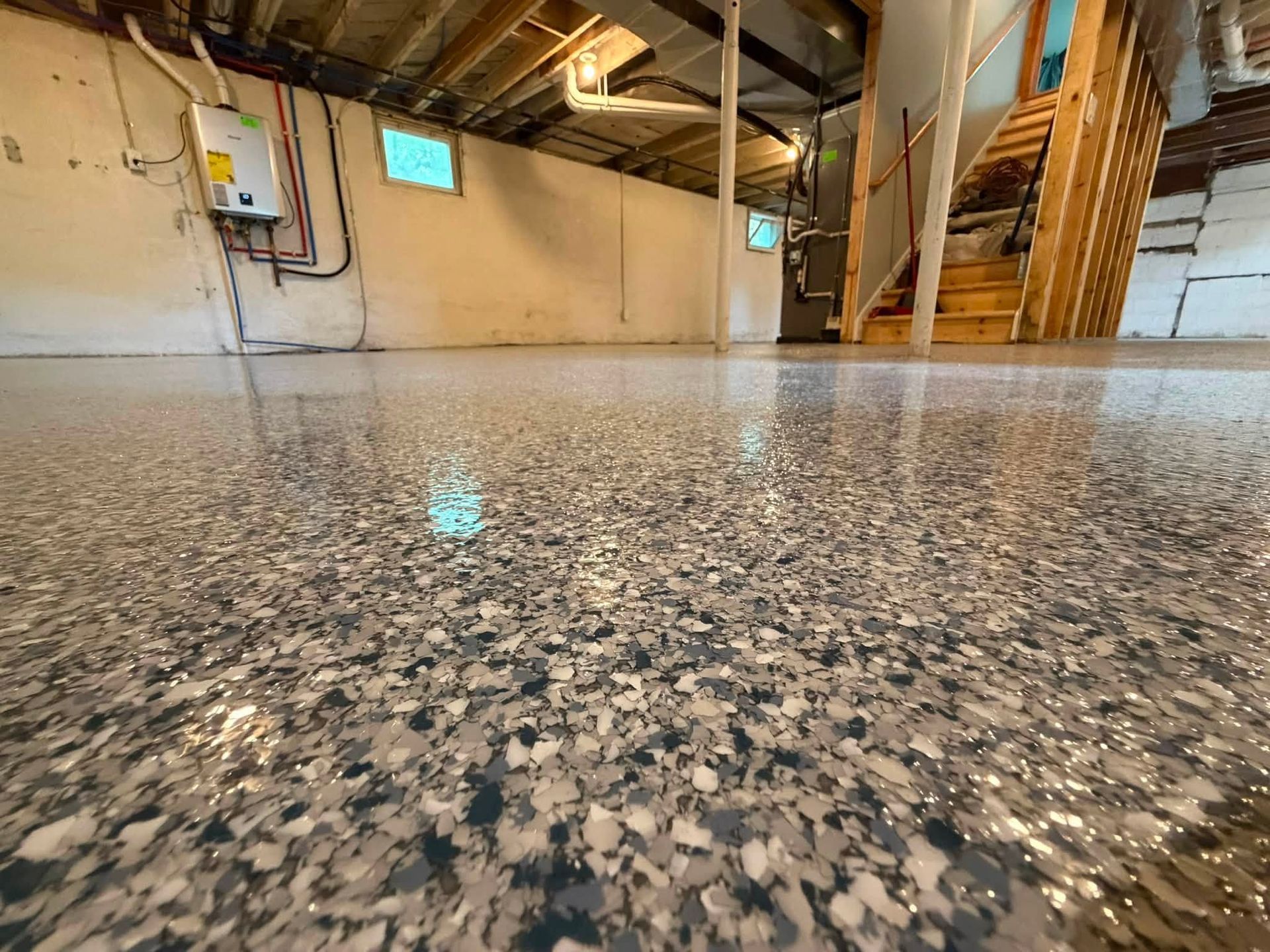
Large attached garages and finished basements are among the most demanding residential surfaces because they absorb vehicle traffic, foot traffic, and spills simultaneously without a chance to recover between uses. Liquid Flooring, LLC installs chip and flake epoxy systems in those spaces across Williamston, selecting flake size, density, and seal coat based on the surface profile of the individual slab. The broadcast flake layer does two things: it adds texture that improves traction and hides the kind of wear marks and scuffs that a solid-color floor shows immediately.
The slab is ground to an open profile before anything is applied, cracks are chased and filled, and moisture is checked before the base coat goes down. Flakes are broadcast into the wet coating, then sealed once the system has cured. Grind depth and diamond tooling are matched to the age and hardness of the concrete in the specific slab being worked on—newer, denser slabs need different equipment settings than older, softer pours.
Request a free estimate to assess your slab and review flake color and density options before any work begins.
What Flake Epoxy Actually Accomplishes on a Residential Slab
The flake broadcast step is timed to the wet coating window—flakes applied too early or too late in the cure cycle will not embed at the correct depth, which affects how the topcoat seals over them. Liquid Flooring, LLC controls that timing directly because the owner is the one doing the work, not a subcontractor. The density of the broadcast also determines whether the base coat color shows through or whether the flakes create a fully blended appearance.
Once the topcoat cures, the floor reads as a textured, sealed surface. Spills bead and wipe away rather than staining the concrete. The flake pattern diffuses the appearance of tire marks and scuffs, so the floor looks consistent even after regular vehicle use. In basements around the Webberville area—where slabs in older homes were poured without the float finish common in later construction—the flake system also helps level the visual impression of the surface.
Flake systems are also installed in commercial spaces where a decorative, easy-clean surface matters alongside durability—retail areas, gym floors, and light-duty production spaces are common applications. The coating weight and topcoat selection shift for commercial use to account for heavier and more sustained traffic than a residential garage receives.
Questions Before Starting Your Flake Epoxy Project
These questions address how the flake system works during installation and what to expect from the finished floor in a residential or commercial setting.
What happens to cracks in the slab before the flake system is applied?
Every crack is opened and chased to determine how deep it runs before being filled, so the repair addresses the full depth of the crack rather than just its surface appearance—repairs done this way do not telegraph through the finished coating.
How is the flake broadcast step timed during installation?
The flakes are cast into the base coat while it is still in its wet window, which allows them to embed at the correct depth before the coat begins to set—the exact timing depends on temperature in the space and the specific coating being used.
Why does grind depth vary from one slab to the next?
The hardness of the concrete determines how aggressively the diamond tooling cuts, and using a setup calibrated for soft concrete on a dense slab will under-grind, leaving a surface profile that is too shallow for proper adhesion.
How does the finished flake floor handle oil or fluid spills?
Because the topcoat seals the flake layer fully, fluids sit on the surface and wipe up without penetrating the coating or staining the concrete underneath.
What is the difference between a thin broadcast and a full broadcast flake finish?
A thin broadcast leaves the base coat color partially visible and creates a speckled look, while a full broadcast covers the base coat entirely with flakes and produces a more uniform, blended appearance—both options are sealed with the same topcoat.
Liquid Flooring, LLC also installs flake epoxy flooring in Lansing, Okemos, East Lansing, Mason, and Howell. To review color options and get a detailed assessment of your slab, call Liquid Flooring, LLC at (734) 686-9399.