Surface Prep That Makes Every Coating Bond
Concrete Grinding and Surface Preparation in Williamston for slabs carrying old sealers, paint, adhesive, or failed coatings that prevent new systems from adhering
Liquid Flooring, LLC provides concrete grinding and surface preparation in Williamston as the foundation of every epoxy and coating installation—and as a standalone service when a slab needs to be brought back to bare, open concrete before another contractor or product can proceed. Grinding removes old sealers, paint, adhesive residue, and the layer of laitance that forms on the surface of nearly every poured slab. Without removing those layers, a new coating has nothing to grip mechanically, and adhesion failure is the predictable result. Basement and garage slabs in older homes across this area routinely carry decades of accumulated surface treatments that must come off completely before anything new will hold.
Grind depth and diamond tooling are chosen based on the age and hardness of the concrete being worked. Newer, denser slabs require different machine weight and tooling grit than older, softer pours. Water or dry-cut adjustments are matched to the specific slab, and the surface is checked after grinding to confirm the profile is correct before the next step is taken.
Schedule a slab assessment to identify what surface condition you are starting from and what preparation the concrete requires before a coating can be applied.
Why the Grinding Approach Changes Depending on the Slab
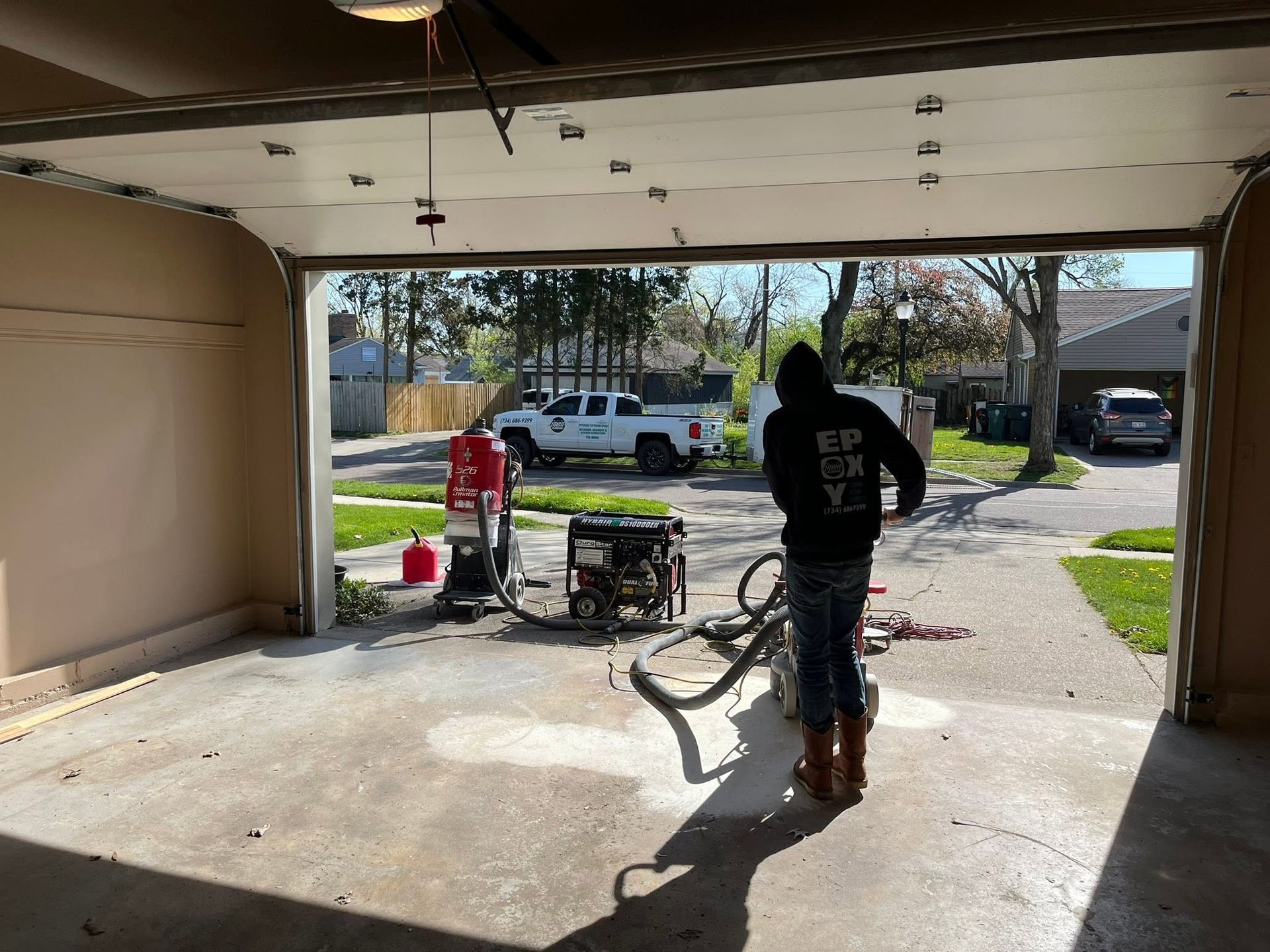
Using the wrong tooling setup for a given slab is one of the most common reasons surface preparation fails to produce a bondable profile. A diamond tooling segment calibrated for soft concrete will glaze over rather than cut when used on a dense, newer slab—leaving a surface that looks worked but has not been opened to the depth a coating needs. Liquid Flooring, LLC selects the tooling and machine configuration for each job based on what the concrete actually is, not what the job type typically calls for.
After correct grinding is complete, the visual difference in the slab is immediate and measurable. The surface shifts from a smooth or painted appearance to a matte, consistently textured finish that feels like fine sandpaper. That texture is the mechanical profile the coating bonds to, and it should be uniform across the entire floor—any smooth spots or areas where old sealer remains are visible indicators that the grind was incomplete.
Surface preparation is handled entirely in-house at Liquid Flooring, LLC, which means the same person assessing the slab is the one operating the equipment. Slabs in the Haslett area with older construction sometimes show multiple layers of material—paint over sealer over adhesive—and stripping those cleanly requires adjusting the grind pass count rather than relying on a single-pass setup to remove everything at once.
Common Questions About How the Work Is Done
These questions address how concrete grinding works in practice and what determines the approach taken on a specific slab in a residential or commercial setting.
What is laitance and why does it have to be removed before coating?
Laitance is a weak, porous layer of cement paste and fine aggregate that rises to the surface as concrete cures—it looks like bare concrete but has poor compressive strength, and any coating bonded to it will peel when the laitance separates from the slab below.
How is the correct grind depth determined for a specific floor?
The grinder operator tests the surface hardness before selecting diamond tooling, then checks the profile produced after the first pass to confirm the grit and machine weight are cutting at the right rate for that particular slab.
What does properly prepared concrete look like before a coating is applied?
A correctly ground surface presents as uniformly matte and slightly textured across the entire slab, with no shiny spots, no visible sealer or paint residue, and a consistent color tone that shows the aggregate beneath the surface layer.
When does old adhesive from floor tiles or carpet backing require special treatment before grinding?
Adhesive that has hardened and bonded deeply into the surface pores may require chemical softening or multiple grinding passes before the slab is clear, depending on the adhesive type and how long it has been in place.
How do Williamston-area garage slabs from earlier construction decades typically differ from newer pours in terms of what grinding requires?
Older slabs in this area are generally softer and more porous, which means they open faster under the grinder but may also show more surface variation—low spots, pits, or areas of heavier aggregate exposure—that need to be assessed before coating selection is finalized.
Liquid Flooring, LLC also performs concrete grinding and surface preparation in Lansing, Okemos, East Lansing, Mason, and Howell. To discuss what your slab requires and how preparation fits into your overall project, call Liquid Flooring, LLC at (734) 686-9399.