Industrial Slabs Stripped and Recoated Correctly
Commercial Flooring in Williamston for facilities with failing coatings, contaminated slabs, or heavy daily traffic that standard sealers cannot handle
Light industrial units, auto-related shops, and commercial spaces across the Lansing area were built on concrete slabs that have often received multiple rounds of sealer or coating over the years, and those layers accumulate in ways that eventually prevent any new system from bonding. Liquid Flooring, LLC handles commercial flooring projects in Williamston and across the Lansing market, starting each job by grinding off existing coatings and sealers wherever possible so the new system reaches bare concrete. That mechanical removal step is what determines whether the finished floor holds under fork traffic, chemical exposure, and daily foot use or begins peeling within months.
The prep sequence for a commercial slab is more involved than residential work because of scale, the history of use embedded in the surface, and the variety of contaminants that can interfere with adhesion. Oil from vehicles or machinery, concrete curing compounds applied at the time of the original pour, and prior coating layers all require grinding rather than chemical cleaning alone, because chemical treatments do not reliably remove bonded residue that mechanical equipment takes off in a single pass. The new system is applied only after the slab reads clean and the surface profile is confirmed to be open enough for the coating to bond.
Schedule a free on-site quote to have your commercial slab assessed and reviewed before any scope of work is confirmed.
What Commercial Epoxy Actually Accomplishes
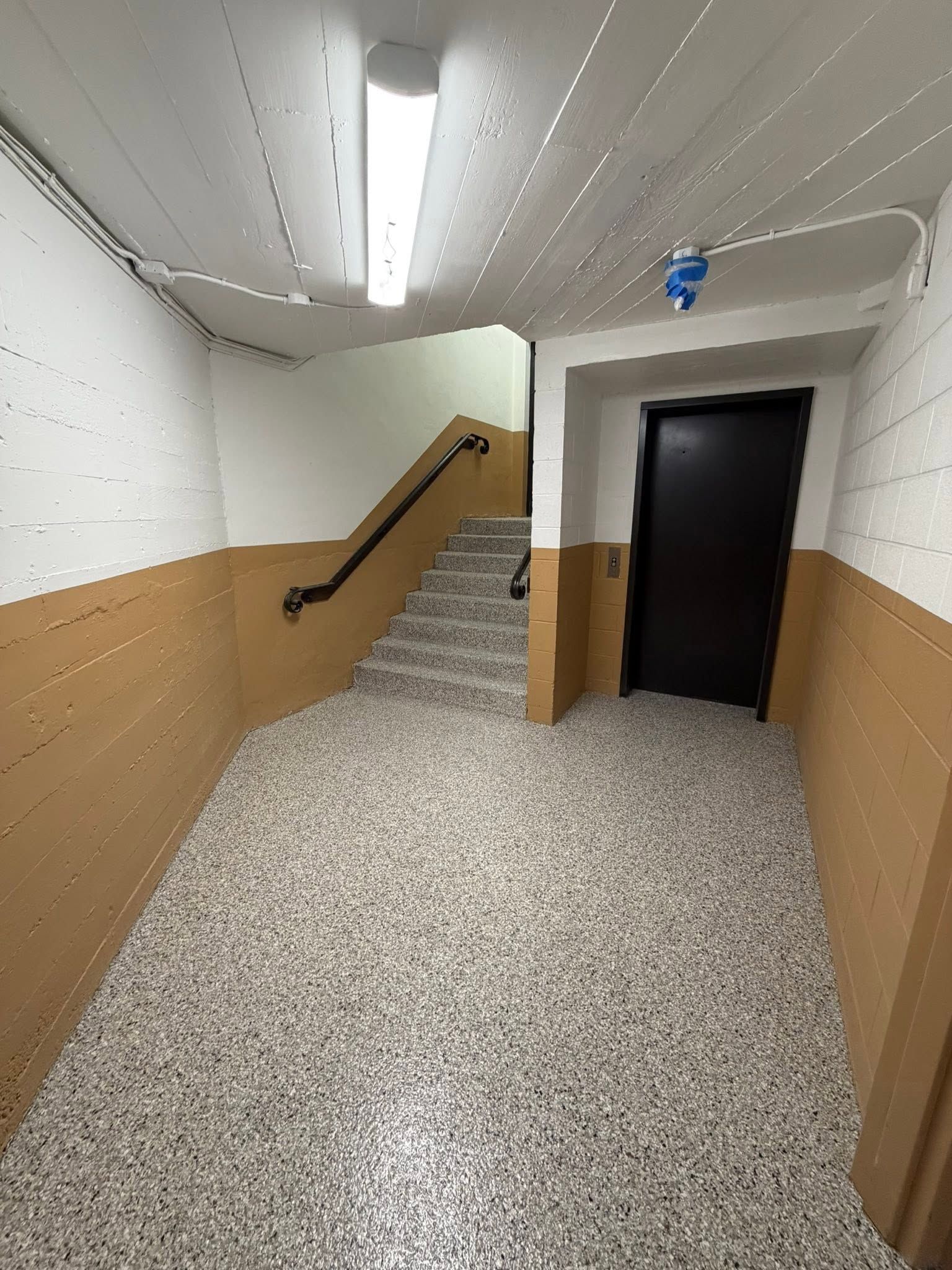
A properly installed commercial epoxy system produces a floor that handles the kind of point loads, rolling equipment, and spill exposure that breaks down standard warehouse paint or low-build sealers within a year of opening. The thickness of the coating system, the number of layers, and the aggregate or anti-slip additive used in the topcoat are all determined by what the space will actually be used for, not by a standard package applied identically to every job.
After installation, facility staff will notice that the floor sweeps and scrubs clean without fluids soaking in, that the surface does not show tire marks or scuffing from equipment at the same rate as an unsealed slab, and that the reflectivity of the finished surface improves visibility in the workspace. These are functional changes tied directly to the coating system's bond strength and mil thickness, not aesthetic additions.
Liquid Flooring, LLC has been operating since 2018 with a licensed and insured owner who oversees commercial jobs from surface evaluation through final topcoat. A free quote is available before any work is scheduled, and the scope of surface preparation required is identified during that visit so the full picture is clear before a project begins.
Common Questions About This Service
Commercial property owners and facility managers often have questions about what the installation process involves and how the floor performs after completion. The answers below are specific to how this type of work is done.
Why must existing coatings be ground off rather than coated over?
Applying a new epoxy system over an existing coating assumes that the bond between the old coating and the slab is strong enough to carry the new layer. In commercial spaces where the existing coating has already begun to fail, coating over it transfers that weak adhesion point into the new system and the failure repeats, often faster because the new layer adds weight without fixing the underlying separation.
How is a commercial slab different from a residential concrete floor in terms of preparation requirements?
Commercial slabs are frequently contaminated with oils, coolants, and other fluids that penetrate the concrete over years of use, and those contaminants must be addressed mechanically and sometimes chemically before the surface profile is open enough for the coating to key in. Lansing-area light industrial and shop spaces often have this history baked into the slab surface, even when the floor looks reasonably clean to the eye.
What anti-slip options are available for commercial epoxy floors?
Broadcast aggregate such as aluminum oxide or polymer grit can be added to the topcoat layer to create a surface that provides traction under wet conditions. The grit size and broadcast rate are adjusted based on the expected traffic type, so a shop floor used by foot traffic and rolling carts receives a different specification than a floor that sees forklift movement.
How long after installation before the floor can handle equipment traffic?
Cure time before light foot traffic differs from the cure time required before heavy rolling loads or vehicle traffic, and the specific system applied determines both thresholds. Scheduling the installation during a planned closure or low-traffic period allows the full cure to complete before the floor returns to full operational use.
What happens if sections of the commercial slab have spalling or surface damage?
Areas with active spalling, deep pitting, or aggregate exposure require repair before the coating system is applied. Skim coating or patching those sections is typically part of the preparation phase rather than a separate project, and the method used depends on the depth and extent of the surface damage present on that specific slab.
Liquid Flooring, LLC also performs commercial flooring work in Lansing, Okemos, East Lansing, Mason, and Howell. Call (734) 686-9399 to arrange a site visit and receive a free quote specific to your facility's slab condition and traffic requirements.