Floors Built as One-of-a-Kind Finished Surfaces
Metallic Epoxy in Williamston for new construction and custom interiors where a standard concrete finish is not the goal
Custom homes and barndominiums going up across the Lansing area increasingly feature interior spaces where the floor is expected to function as a design element rather than a utility surface. Liquid Flooring, LLC installs metallic epoxy floors in Williamston and across the Lansing market, approaching each installation as a custom project with a visual outcome the owner confirms before work begins. The owner previews the planned finish so there are no surprises when the coating cures and the final appearance sets.
Metallic epoxy uses pigmented resin that moves and settles in ways that produce depth and variation across the surface. Because the pigment behaves differently depending on application technique, temperature at the time of pour, and the condition of the concrete underneath, each floor ends up genuinely distinct. The concrete is ground and prepared before the metallic system goes down, which matters because a metallic finish will reveal any surface irregularity more visibly than a solid-color coating will.
Arrange a consultation with Liquid Flooring, LLC to review the finish options and see examples of completed metallic installations before committing to a design.
How Metallic Epoxy Addresses Custom Finish Goals
The installation sequence begins with mechanical grinding of the concrete to establish a clean, open surface profile that gives the epoxy system a proper mechanical bond. Once the slab is prepared and moisture readings are within range, the metallic pigment is introduced into the epoxy resin and applied in a technique that creates the swirl, depth, or movement pattern planned for that specific floor. Application speed and tool direction during this stage directly shape the final visual.
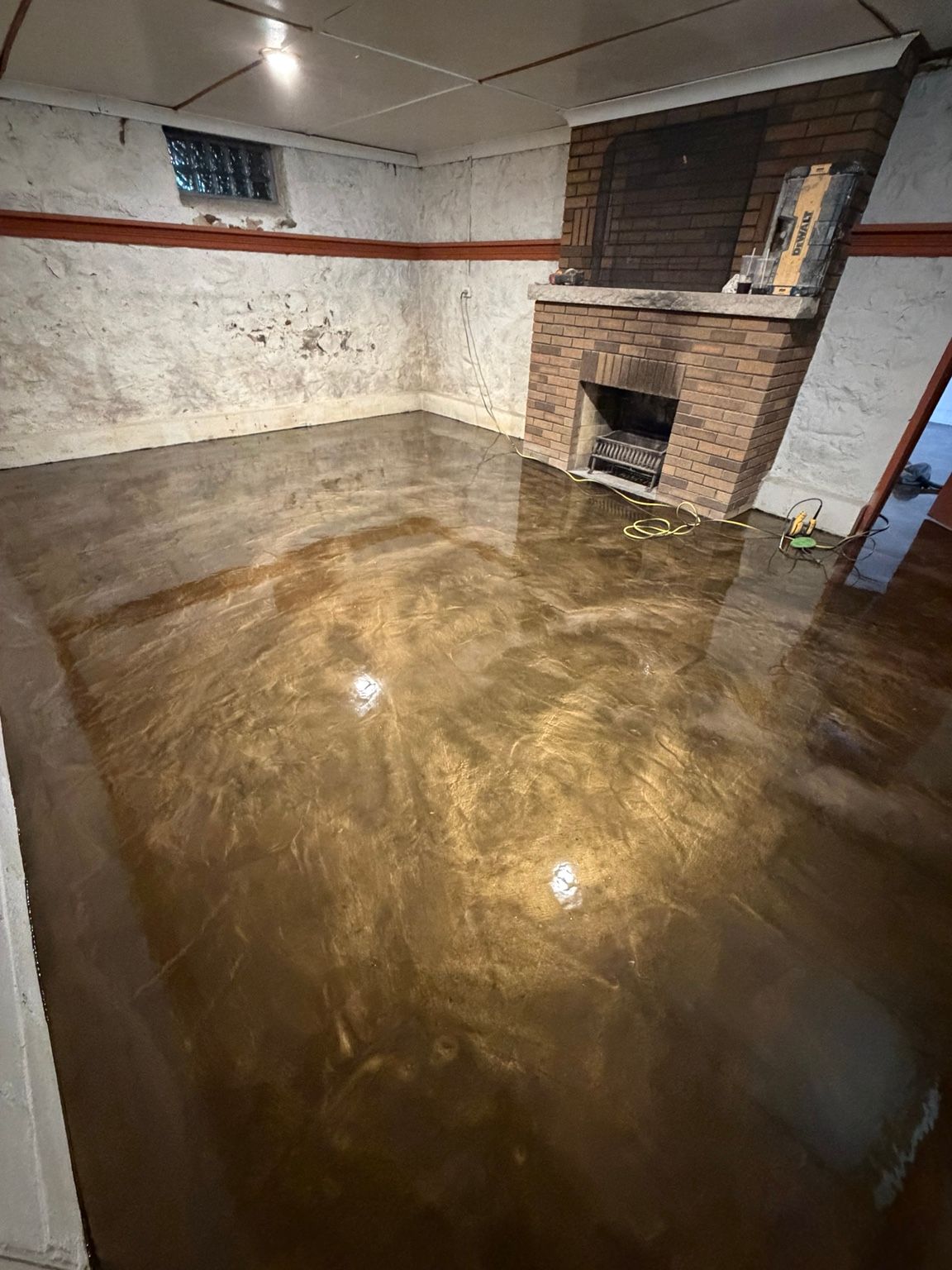
Once cured, a metallic epoxy floor shows a surface with visible depth and tonal variation that shifts slightly depending on the angle of light and the position of the viewer. Unlike painted concrete or basic solid-color epoxy, the finish does not look flat or industrial. In a finished basement, showroom, or barndominium great room, the floor becomes a surface people notice rather than walk past.
Liquid Flooring, LLC has operated since 2018 with a licensed and fully insured owner who stays involved from preparation through final coat. Because each metallic floor is custom, the owner walks through the visual plan and expected outcome before work starts, which eliminates the scenario where the client sees something different from what they expected once the resin cures and cannot be changed.
What Property Owners Ask About the Work
Homeowners choosing a metallic epoxy finish for the first time often have questions about how the design is controlled and what the installation process involves day to day. The answers below focus on the work itself.
How is the metallic pigment pattern controlled during application?
The applicator manipulates the wet resin using tools and airflow to direct how the pigment moves and settles before the resin begins to set. While no two metallic floors are identical, an experienced installer can guide the general movement pattern, depth, and focal areas to match a planned design rather than leaving the result entirely to chance.
Why does surface preparation matter more for metallic epoxy than for solid-color coatings?
Metallic finishes are translucent enough that surface contamination, old sealer residue, or uneven grinding marks can telegraph through the coating and affect the final appearance. Grinding to a consistent profile and removing any previous coatings completely is the step that determines whether the metallic layer reads as clean and intentional or patchy.
What concrete conditions disqualify a slab from receiving a metallic epoxy system?
Slabs with active water intrusion, major cracking, or spalling that compromises the surface at depth may need repair work before a metallic system can be applied. In Williamston and the surrounding Lansing area, older poured slabs in outbuildings and barndominiums occasionally show surface deterioration that requires addressing before coating work begins.
How many coats are typically involved in a metallic epoxy installation?
A standard metallic system involves a base coat, the metallic layer where the design work occurs, and at least one clear topcoat that protects the pigment layer from wear and UV exposure. The topcoat is what determines the long-term durability and surface sheen, and it is not optional in any functional installation.
What maintenance does a metallic epoxy floor require after installation?
The surface can be maintained with a pH-neutral floor cleaner and a soft mop or microfiber pad. Abrasive scrubbers or concentrated solvent cleaners can dull the topcoat over time, so the choice of cleaning product matters for preserving the depth and clarity of the finish.
Liquid Flooring, LLC also installs metallic epoxy floors in Lansing, Okemos, East Lansing, Mason, and Howell. Call (734) 686-9399 to set up a review of finish options and have your slab assessed for a metallic epoxy installation.