Basement Slabs Prepared for Coating That Holds
Basement Epoxy Flooring in Williamston for below-grade slabs with moisture concerns, prior coating failures, or bare concrete that absorbs spills
Older Michigan homes carry basements built to the standards of their era, which often means uncoated poured slabs, evidence of past leaks in the concrete, and no provisions for the vapor drive that pushes moisture up through the slab from hydrostatic pressure below grade. Liquid Flooring, LLC coats basement floors in Williamston and across the Lansing area, and the prep sequence for below-grade slabs is more detailed than an above-grade application because the failure mode is different. Where water is pushing up through the concrete from hydrostatic pressure, a moisture vapor barrier goes down before the coating, so the epoxy system is not undermined from below after installation.
The slab is ground and moisture-tested before any coating decision is made. Testing matters because a basement floor can look and feel dry while still emitting vapor at levels that will cause a standard epoxy system to blister and lift within months. Identifying the moisture condition of the slab before coating selection determines whether a standard system is appropriate or whether a vapor barrier layer is required as the foundation of the coating stack. Haslett and Bath area homes with basements that have a documented history of leaks are candidates for the barrier approach regardless of how the slab looks at the time of the visit.
Set up a free quote visit to have your basement slab tested and the coating options reviewed based on what the testing shows.
Why Basement Coating Failures Start Below the Surface
Most basement epoxy failures are not failures of the coating product itself. They are failures of the adhesion layer between the coating and the slab, caused either by moisture vapor pushing up from below, contamination in the surface that was not removed by grinding, or a combination of both. Liquid Flooring, LLC addresses both variables by grinding the slab to remove any previous sealers, paint, or residue, and then testing moisture levels before the system is selected. That sequence means the coating installed is matched to the actual condition of the slab rather than applied on assumption.
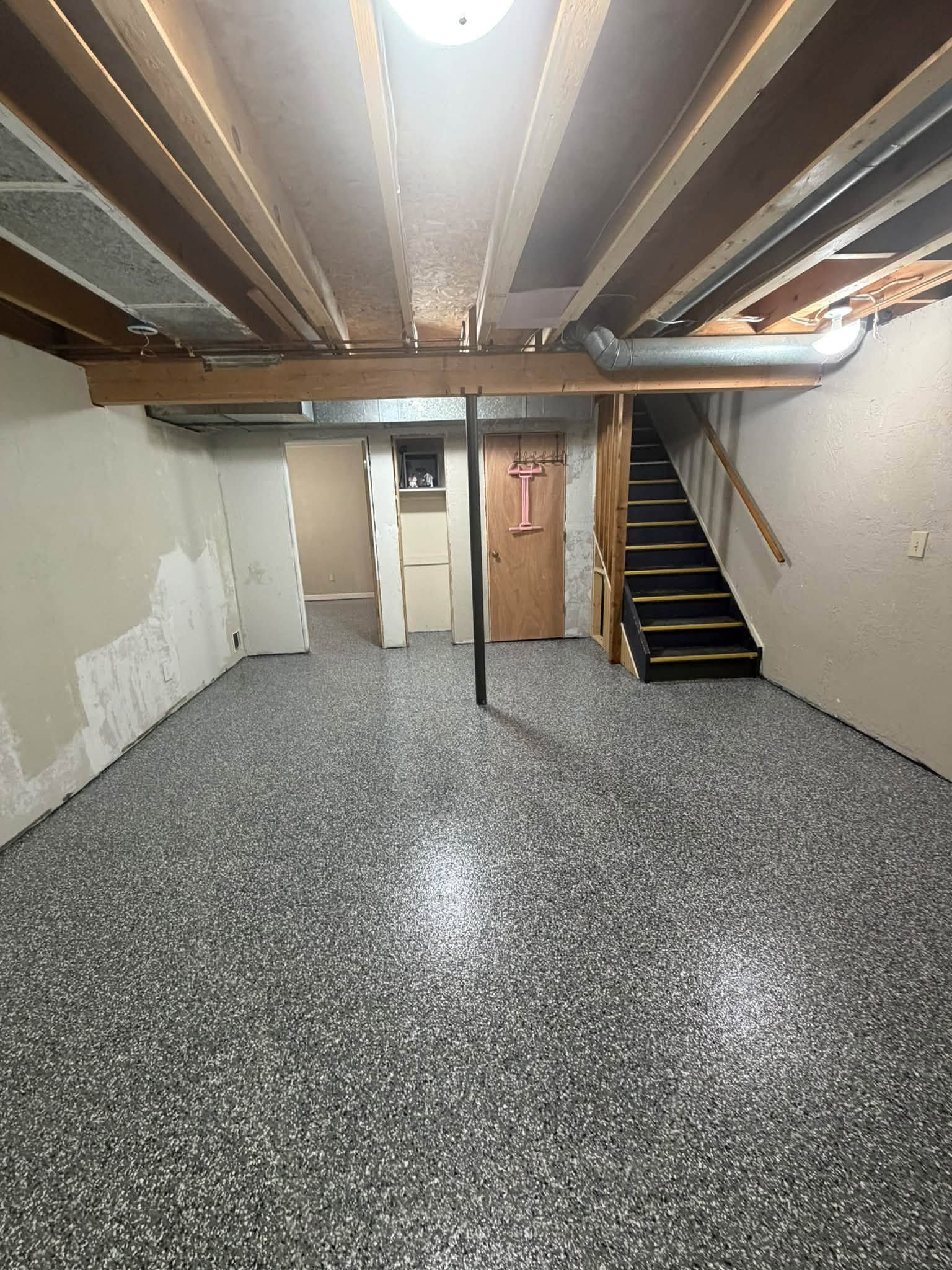
After the system is installed and cured, you will notice that spills bead on the surface rather than darkening the concrete, that the floor does not show the dusty or efflorescent residue that indicates moisture wicking through an uncoated slab, and that the surface holds a consistent appearance across the entire basement rather than developing patches of lifted or discolored coating. A properly applied vapor barrier beneath the epoxy layers means that the system does not have to fight the slab's own moisture content to stay in place.
Liquid Flooring, LLC has been operating since 2018 with a licensed and fully insured owner who manages the evaluation and installation directly. The coating system specified for each basement is based on what moisture testing reveals, not on a standard package offered regardless of slab condition.
Answers About How the Work Is Done
Below-grade concrete behaves differently from garage and commercial slabs, and the questions homeowners ask about basement epoxy reflect that. The answers below are specific to the installation process and what affects the outcome.
How does moisture testing change the coating system selected for a basement floor?
If testing shows vapor emission rates above the threshold the epoxy product is designed to tolerate, a moisture vapor barrier epoxy must be installed as the first layer before any decorative or functional coating is applied. Skipping that barrier on a high-emission slab is the direct cause of most basement coating failures, where the floor looks fine for several months before blistering and lifting as vapor accumulates beneath the coating.
What causes hydrostatic pressure to push water up through a basement slab?
Hydrostatic pressure builds when the water table or accumulated groundwater around the foundation creates upward force against the bottom of the slab. In homes built before modern drainage systems were standard, there may be no perimeter drain to relieve that pressure, which means the slab itself is the only barrier between standing groundwater and the interior. A vapor barrier in the coating stack addresses the coating's vulnerability to that pressure, though it does not change the underlying drainage condition.
Why does grinding matter for a basement floor that looks smooth and clean already?
What looks like a clean surface may still have penetrating sealers, old paint, or efflorescence that will prevent a new epoxy from achieving a mechanical bond. Grinding removes those materials and creates the surface texture the resin needs to key into. In Williamston and the surrounding area, basement slabs in homes built in the 1970s through 1990s frequently have multiple rounds of hardware-store waterproofing paint that must come off before a professional coating can be applied.
What decorative options work for a basement epoxy installation?
Solid-color systems and chip broadcast systems are both available for basement applications. Chip systems are popular in finished basements used as living or recreation space because the visual texture of the flake layer is more consistent with a finished interior than a plain epoxy surface, and the chip layer adds minor slip resistance before the clear topcoat is applied.
How is a basement epoxy floor maintained after installation to preserve the coating?
Sweeping and mopping with a diluted pH-neutral cleaner is sufficient for routine maintenance. Dragging heavy furniture or appliances across the surface without felt pads can scratch the topcoat, and concentrated bleach or solvent-based cleaners should be avoided because they can degrade the clear coat layer over time and reduce the surface gloss.
Liquid Flooring, LLC also coats basement floors in Lansing, Okemos, East Lansing, Mason, and Howell. Call (734) 686-9399 to schedule a free basement slab evaluation and have the moisture condition of your floor assessed before selecting a coating system.