Floors Built for Forklifts and Daily Load
Commercial Epoxy Flooring in Williamston for businesses with heavy traffic, rolling equipment, and surfaces that cannot afford downtime
Liquid Flooring, LLC applies commercial epoxy flooring for businesses in Williamston and the surrounding corridor, treating each project as its own job rather than a repeat of the last. The concrete is ground and prepared specifically to match the traffic pattern and loads the floor will carry—a retail showroom floor and a light industrial bay require different coating weights and surface profiles. Businesses that run forklifts, carts, or high foot traffic need a floor system chosen for that specific use, not a generic coating applied over unverified concrete.
The process starts with grinding the existing slab to open the surface and remove anything that would prevent a proper bond—old sealers, laitance, or failed coatings. Once the profile is right, the coating system is selected to match the load requirements. The owner can show the finished look before work begins, so there are no surprises about color, texture, or sheen level when the job is done.
Request a free quote to get a floor assessment based on your specific space and the way it operates.
How Commercial Epoxy Is Matched to the Work Being Done
Not every commercial coating is the same thickness, and the difference matters in practice. A floor carrying pallet jacks and loaded carts needs a coating system built to resist impact and abrasion at the surface, not just color. Liquid Flooring, LLC selects grind depth and coating weight based on what the floor actually does, which means the prep work changes depending on the density and age of the concrete already in place.
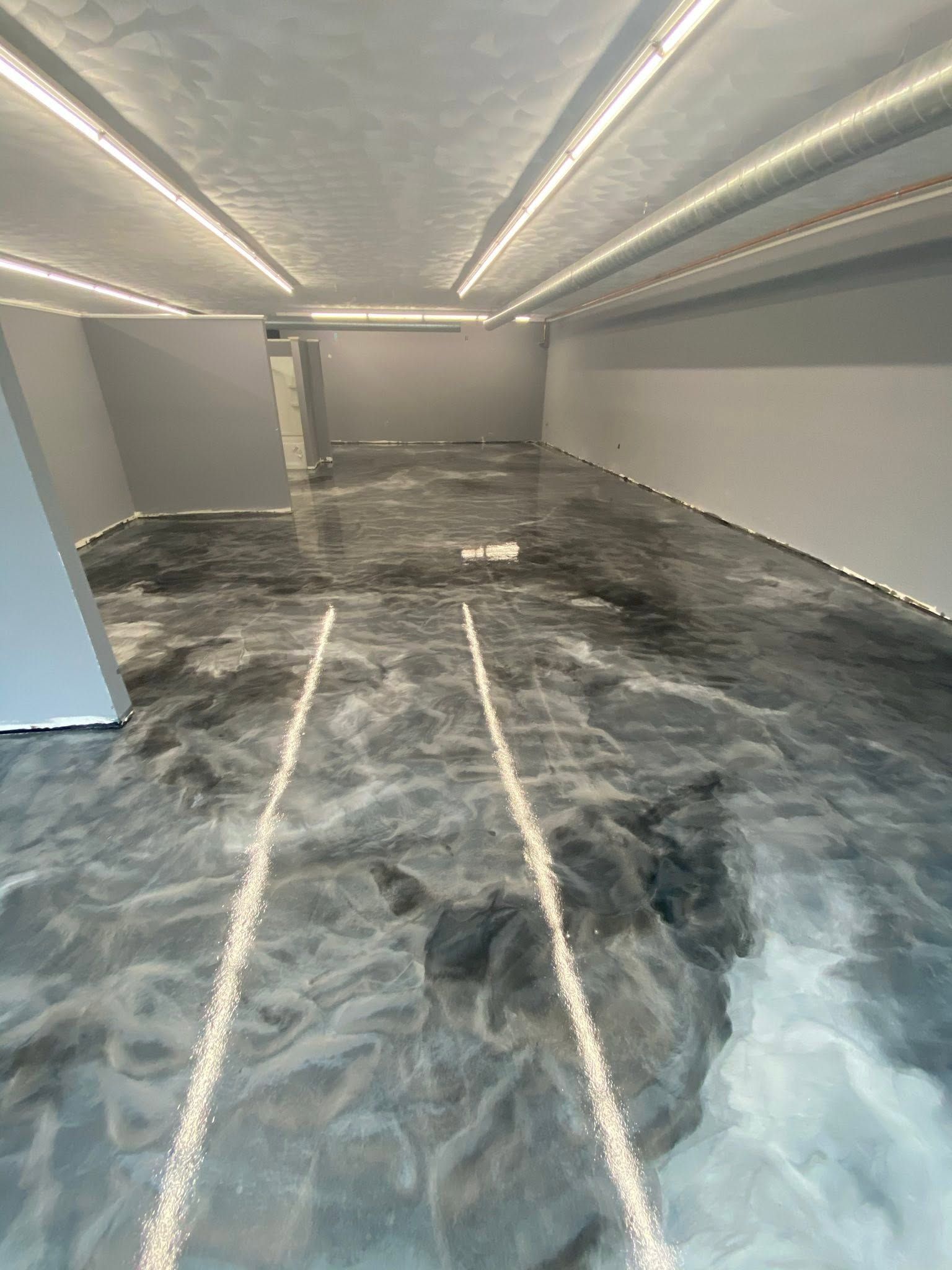
Once the work is complete, the floor reads as a sealed, unified surface—cracks and worn patches are addressed before coating, so the finished result does not show the history of the slab underneath. Rolling equipment moves cleanly across it, and spills sit on top rather than soaking in, which simplifies daily cleanup for staff.
Commercial and light industrial spaces in the Okemos and Lansing corridor vary in age and original slab quality, and some older buildings carry concrete that was poured in multiple stages or with aggregate that requires a different diamond tooling setup to grind correctly. Those variables are assessed before the job begins, not discovered mid-project.
Answers About How Commercial Epoxy Work Gets Done
These questions come up most often from business owners evaluating whether epoxy flooring suits their space and how the process actually works on a commercial slab.
What does concrete grinding accomplish before an epoxy coating goes down?
Grinding opens the surface of the concrete to a specific profile so the epoxy has texture to grip rather than sitting on a sealed or contaminated surface—without that profile, the coating can peel under load or foot traffic.
How is the coating system chosen for a commercial floor?
The weight class of the system—how many coats, what thickness, and what topcoat—is selected based on the type of traffic the floor carries, whether that is rolling equipment, foot traffic, or chemical exposure.
Why does the age and hardness of the concrete change the approach?
Older, softer slabs require different diamond tooling and sometimes adjusted machine weight compared to newer, denser pours, and using the wrong setup either under-grinds or damages the surface before coating begins.
What does the floor look like once the epoxy system has cured?
The surface presents as a consistent, sealed finish with no visible pores or aggregate showing through, and the color or flake pattern selected before the job is what appears when the work is complete.
How does surface preparation in older Williamston-area commercial buildings differ from newer construction?
Buildings in this corridor that were built in earlier decades often have slabs with residual adhesive or paint from previous floor coverings, and those materials have to be fully removed before any coating system will bond correctly.
Liquid Flooring, LLC also installs commercial epoxy flooring in Lansing, Okemos, East Lansing, Mason, and Howell. To schedule a walkthrough of your facility and get a detailed assessment of what the floor requires, contact Liquid Flooring, LLC directly at (734) 686-9399.