Crack Repairs That Stay Hidden Under Coating
Concrete Crack and Surface Repair in Williamston for basement and garage slabs where surface patching has already failed or where cracks show through previous coatings
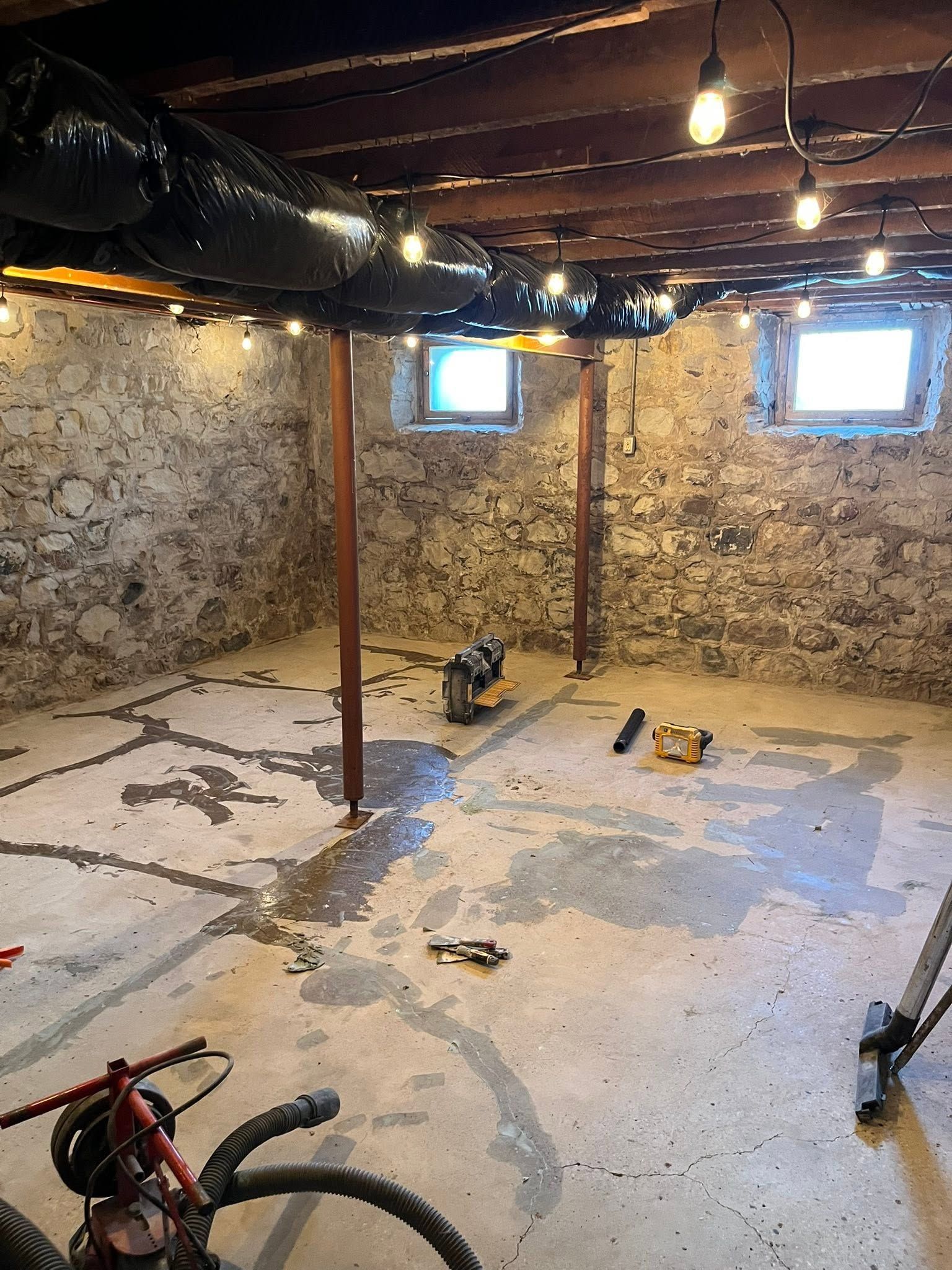
A crack that is patched only at the surface will telegraph through a coating—sometimes within months of application—because the repair material and the surrounding slab expand and contract at different rates. Liquid Flooring, LLC repairs cracked concrete floors in Williamston by opening and chasing each crack before filling it, which means the repair extends to the actual depth and width of the damage rather than just covering what shows on top. Older basement slabs in this area frequently crack from settling and water movement, and those cracks carry movement history that a surface-only patch cannot address.
Every crack is cleaned after chasing, filled with a material matched to the crack type and slab condition, and then the surrounding surface is prepared to transition evenly into the rest of the floor. Repairs are completed before any coating is applied so the finished floor presents as a single, consistent surface without visible repair lines. The owner performs the repair work directly—it is not handed off to a subcontractor.
Arrange an on-site evaluation to assess crack depth and surface condition before deciding how to proceed with your floor.
The Difference Between Surface Patching and a Full Crack Repair
Chasing a crack means running a grinder or chisel along its path to widen and deepen the opening slightly, which removes any loose or contaminated material and confirms how far the crack actually extends. That step changes the repair because narrow, shallow fills fail faster—the repair material does not have enough contact area with the surrounding concrete to stay bonded under stress. Liquid Flooring, LLC uses this approach on every crack so the fill material seats fully into prepared concrete rather than bridging loose debris.
Once repairs are complete and the coating is applied over the prepared slab, the finished floor shows a smooth, continuous surface. The repaired areas do not print through as ridges or color variations in the coating, and the transition between repaired and unrepaired sections is not visible to someone walking on or cleaning the floor. In the Webberville area, where older residential slabs frequently show multiple crack patterns from years of settling, this outcome is only achievable when each crack is individually assessed rather than bulk-filled.
Crack repair is sequenced before grinding and coating, which means it is part of a coordinated project rather than an afterthought. If a slab has both cracks and old surface coatings, the order of operations—repair, then grind, then coat—is determined by what the slab needs rather than what is fastest to complete.
Answers About How Crack Repair Gets Done
These questions address the repair process itself and what determines the approach taken on a specific crack in a basement, garage, or commercial floor.
What does it mean to chase a crack before filling it?
Chasing involves running a tool along the crack's path to open it to a consistent width and remove loose material from the edges, which gives the filler material clean, solid concrete to bond to on both sides of the repair.
How is the fill material selected for a specific crack?
The choice of fill material depends on crack width, depth, and whether the crack is still active—a crack that is actively moving requires a flexible repair material, while a stable crack can be filled with a rigid compound that integrates more directly with the surrounding slab.
Why do cracks in basement slabs show through coatings that were applied without prior repair?
Coating film is thin enough that any movement or height difference at a crack line telegraphs through to the surface, especially as the coating cures and loses flexibility—repairing the crack before coating eliminates the substrate irregularity the coating would otherwise follow.
What is the sequence of steps between crack repair and the final coating application?
After cracks are filled and cured, the repaired areas are ground flush with the surrounding slab so there is no height transition, and then the full surface preparation is completed before any coating material is applied.
How can a homeowner identify whether a crack in their garage or basement slab is stable or still moving?
A crack that has clean, matching edges on both sides is more likely to be stable from settling that has resolved, while a crack where one edge sits higher than the other or where the gap width varies along its length may still be active—both types should be assessed before a coating system is selected.
Liquid Flooring, LLC also performs concrete crack and surface repair in Lansing, Okemos, East Lansing, Mason, and Howell. To have your slab assessed and get a clear picture of what the repair work involves, call Liquid Flooring, LLC at (734) 686-9399.