Concrete That Bonds and Actually Stays
Epoxy Flooring in Williamston for slabs where coatings have peeled, failed, or never properly adhered
Liquid Flooring, LLC is a locally owned epoxy flooring contractor based in Williamston, serving residential and commercial properties across the Lansing area. Many slabs in this region were poured decades ago and have accumulated layers of old sealers, curing compounds, or failed coatings that prevent new epoxy systems from bonding correctly. Every project starts with moisture testing and mechanical grinding of the concrete surface, so the system bonds directly to the slab rather than sitting on top of whatever was applied before.
The preparation sequence is what separates a coating that holds from one that delaminates within a year. Grinding opens the concrete's surface profile, giving the epoxy something to grip at a mechanical level. Moisture testing happens before any material goes down, because hydrostatic pressure or elevated vapor readings in a slab will push a coating off from underneath regardless of how well the top surface was cleaned. These two steps together determine whether the system performs over years of regular use or begins lifting at the edges within a season.
Request a free on-site quote to have your slab evaluated and reviewed before any work is scheduled.
What Proper Epoxy Installation Actually Requires
Once moisture readings are confirmed to be within acceptable limits, the concrete is ground to an open, uniform surface profile. That grinding step also removes any existing sealers, residues, or failed coatings that would otherwise act as a barrier between the new epoxy and the slab. The coating system is then applied in layers calibrated to the intended use of the space, whether that is a residential garage, a workshop, or a light commercial floor.
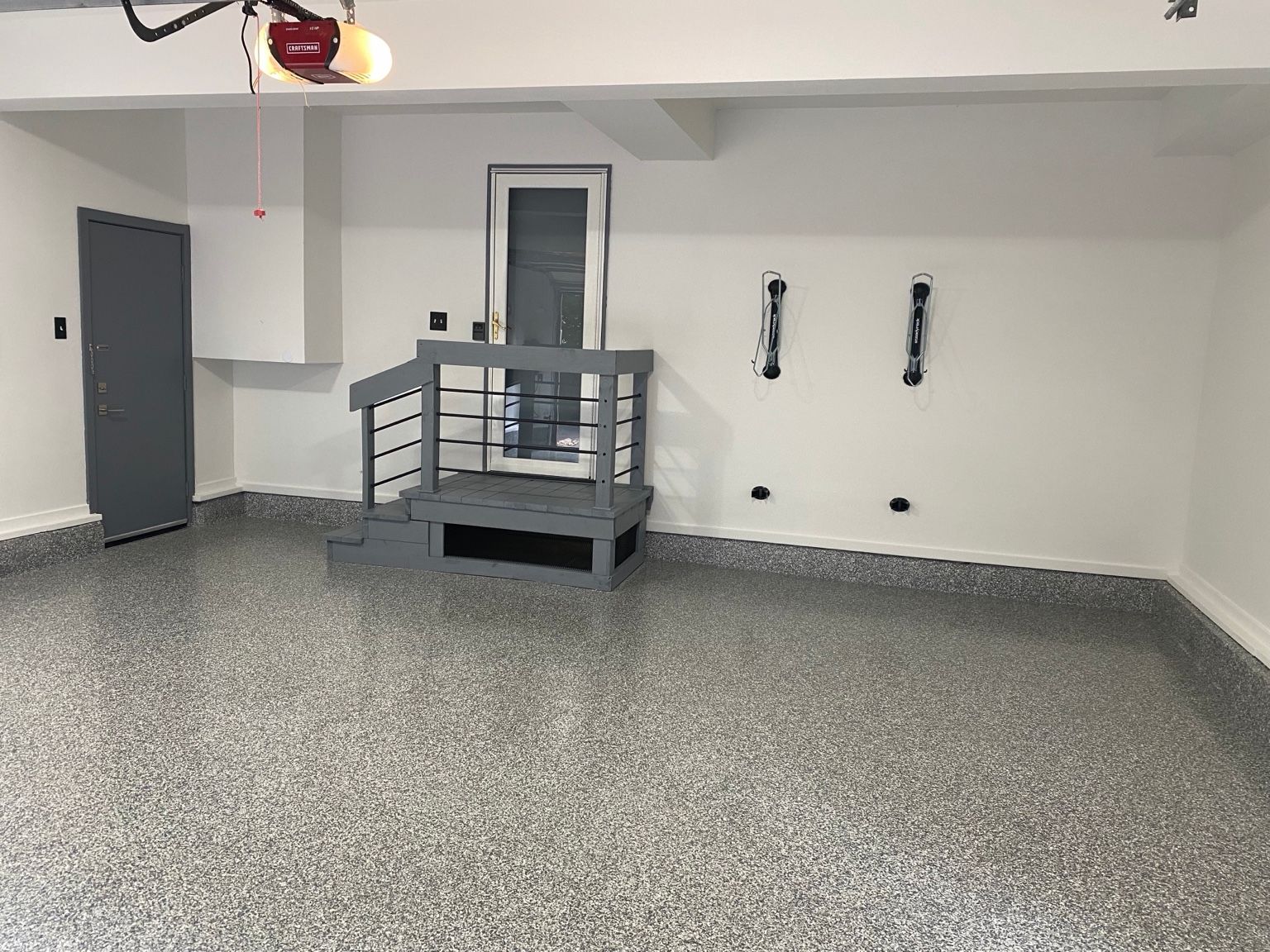
After the system cures, you will notice a surface that rolls clean with a mop rather than absorbing fluid, shows a consistent sheen without soft spots or cloudy patches, and does not flex or hollow-sound underfoot where a coating has lifted. The difference in durability between a properly bonded system and a DIY-grade rolled product becomes visible within the first year of vehicle traffic or tool drops.
Liquid Flooring, LLC has been operating since 2018 with a licensed and fully insured owner who handles the work directly. The scope of each project is confirmed before work begins, so the surface preparation, coating layers, and final finish are agreed upon before any material is mixed. Decorative options such as chip blends or solid colors are available depending on the application.
Answers About How the Work Is Done
Property owners in Williamston frequently ask about preparation requirements and what to expect on the day of installation. The questions below focus on how the work itself is performed.
What does concrete grinding actually do to prepare a slab for epoxy?
Grinding removes the top layer of the concrete surface to create a mechanical profile, similar to a fine texture, that allows the epoxy resin to penetrate and lock in rather than simply sitting on the surface. Without this step, even a chemically clean slab will not hold a coating under vehicle traffic or point loads from equipment.
How is moisture testing done before epoxy is applied?
A calcium chloride or relative humidity probe test is used to measure vapor emission from the slab, because concrete that looks dry on the surface can still carry enough moisture vapor to cause coating failure from below. Readings that exceed the product manufacturer's tolerance require a vapor barrier before the coating system can proceed.
What happens if the existing slab has a previous sealer or coating on it?
The previous material must be ground off before the new system is applied, because epoxy cannot bond through a sealer. In Williamston and the broader Lansing area, many older slabs have received multiple coats of hardware-store products over the years, and grinding through those layers is a standard part of the prep sequence rather than an unusual complication.
Why does the coating sometimes peel near the edges or garage door threshold first?
Edge and threshold areas are typically where moisture migration is highest and where grinding coverage can be uneven if the equipment cannot reach flush to the wall. Proper preparation includes attention to those perimeter zones, not just the open field of the slab.
What should a finished epoxy floor look like when the job is done correctly?
A properly installed system shows a consistent color and gloss level across the entire slab, with no bubbling, fisheyes, or soft spots where the coating did not bond. Running your hand across the surface should feel uniform, and there should be no areas that flex or sound hollow when tapped.
Liquid Flooring, LLC also installs epoxy flooring in Lansing, Okemos, East Lansing, Mason, and Howell. To arrange an evaluation of your slab's current condition and surface profile, contact Liquid Flooring, LLC directly at (734) 686-9399 to schedule a free quote visit.