Concrete Slab Floors Built for Real Use
Barndominium flooring in Williamston for bare concrete slabs that need a durable, matched coating system
Barndominiums across the rural and semi-rural stretches outside Williamston are built on poured concrete slabs, and that slab typically runs unbroken beneath the garage bays, the shop area, and the living section alike. Most owners arrive at the question of what to do with bare concrete only after the structure is finished, without a clear answer. Liquid Flooring, LLC epoxy-coats those slabs, preparing the concrete first and then applying a coating system matched specifically to how each zone of the space will actually be used.
The process begins with grinding the slab surface and checking it for moisture, because hydrostatic pressure pushing water up through a pole-barn slab is a common condition that will cause any coating to fail prematurely if it is not addressed first. Where moisture vapor is present, a vapor barrier goes down before the coating system is applied. That sequencing step is what separates a floor that stays bonded for years from one that bubbles and peels within a season of use.
Request an on-site evaluation of your slab to identify any moisture conditions and determine which coating system fits your space.
How the Coating System Is Matched to Each Zone
A barndominium's floor presents a more complex scope than a standard garage because the same slab often transitions from a heavy-use bay where vehicles and equipment sit to a finished living area that needs to look and feel residential. The coating selected for each section of the floor is chosen based on what will happen on that surface—foot traffic only, rolling loads, shop chemicals, or a combination. Liquid Flooring, LLC handles the full sequence from surface preparation through final topcoat, with the owner personally quoting and installing the work on every project.
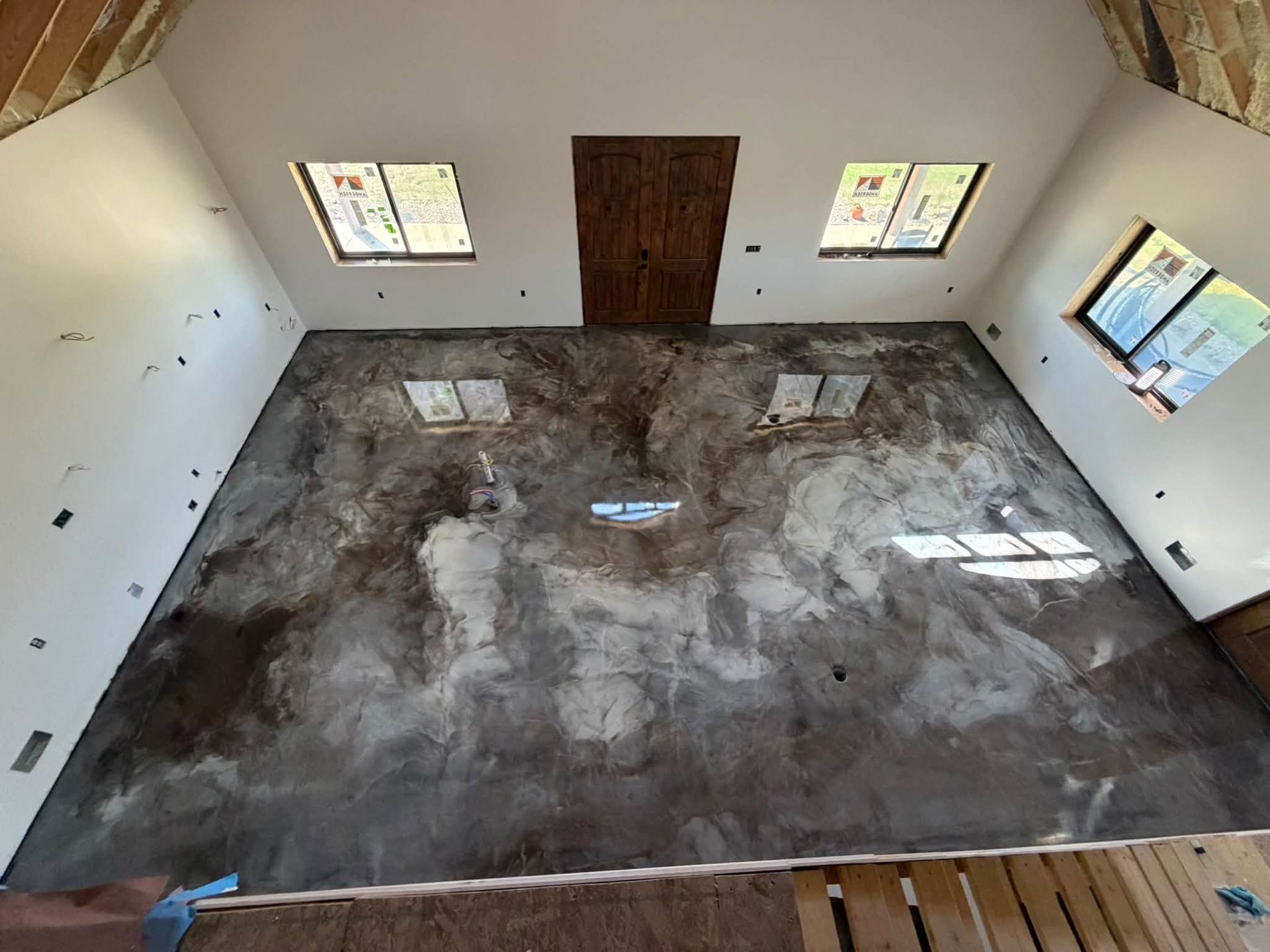
Once the coating is cured, the slab is no longer a liability in the space. Concrete dust stops spreading through the living section, bare gray slabs in the garage bays become sealed and cleanable surfaces, and the visual transition between zones becomes intentional rather than accidental. Those are observable, immediate changes that affect how the entire structure functions from day one.
Because the same person who evaluates the floor is the one who applies the coating, the specifications set during the quote carry through to the installation without being handed off or reinterpreted. The coating system applied in a shop bay with vehicle traffic will differ in thickness and hardener ratio from what goes into the living area—those are decisions made at the time of assessment and executed by the same set of hands.
What Property Owners Ask About the Work
Barndominium slabs in areas like Perry and Bath present specific conditions that affect how the coating work is scoped and sequenced. The following questions address the process directly.
Why does moisture testing happen before any coating is applied?
Concrete slabs in pole-barn construction are often poured directly on grade without a sub-slab vapor retarder, which means hydrostatic pressure can drive moisture upward. If a coating is applied over a slab with active vapor transmission, the bond between the coating and the concrete will fail, causing lifting and bubbling. Moisture testing identifies that condition before the coating system is selected.
How is the slab surface prepared before the epoxy goes down?
The slab is mechanically ground to open the concrete surface, remove any existing contamination, and create a profile the coating can bond to. Grinding also reveals low spots, cracks, or surface defects that need to be addressed before application begins.
What determines which coating system is used in each section of the barndominium?
The intended use of each zone drives the selection. A garage bay that will see vehicle traffic, oil drips, and jack stands requires a different system than a living area with foot traffic only. Coating thickness, topcoat chemistry, and slip resistance are all adjusted based on that use profile.
How does the coating perform in a shop area where chemicals or solvents are present?
Epoxy coatings used in shop environments are formulated to resist common automotive and agricultural chemicals, but the specific topcoat matters. A polyaspartic or urethane topcoat over the base epoxy adds an additional layer of chemical resistance compared to epoxy alone, and that layered approach is standard for heavy-use bay floors in Williamston area barndominiums.
What does a properly finished barndominium floor look like once the work is complete?
The surface should be uniform in sheen and color across the coated area, with no visible bubbles, pinholes, or delamination at the edges. Transition points between zones should be clean and deliberate. Any aggregate broadcast into the surface for texture should be fully locked under the topcoat and not loose underfoot.
Liquid Flooring, LLC also installs barndominium flooring in Lansing, Okemos, East Lansing, Mason, and Howell. To discuss the specific zones of your slab and how each will be coated, contact Liquid Flooring, LLC directly at (734) 686-9399 to arrange a site visit and walkthrough of the full scope.