Garage Floors That Handle Daily Vehicle Use
Garage Epoxy Flooring in Williamston for attached and detached slabs showing stains, surface pitting, or coatings that have begun to lift
A coated garage floor that looks clean after three years of vehicle parking and fluid drips is the result of preparation, not product. Liquid Flooring, LLC installs epoxy floors in attached and detached garages in Williamston and the Lansing area, and the process starts with grinding the concrete before any coating is mixed. Large attached garages on newer Lansing-area homes get daily exposure to vehicle weight, hot tire contact, oil drips, and road salts tracked in from the driveway, and a basic rolled-on garage paint or hardware-store epoxy kit cannot hold that surface intact because those products bond to the top of the slab rather than into its structure.
Grinding the concrete opens the surface at a mechanical level and removes any residue, dust laitance, or previous product that would act as a release layer between the new epoxy and the slab. The owner can show the planned finish before work begins, so the color, chip blend, and topcoat sheen are confirmed rather than assumed. This pre-visualization step matters because once a high-build epoxy system has cured, the surface is set and cannot be adjusted without removing and recoating.
Request a free quote to have your garage slab reviewed and a finish option selected before scheduling the work.
The Difference Between Bonded and Applied Coatings
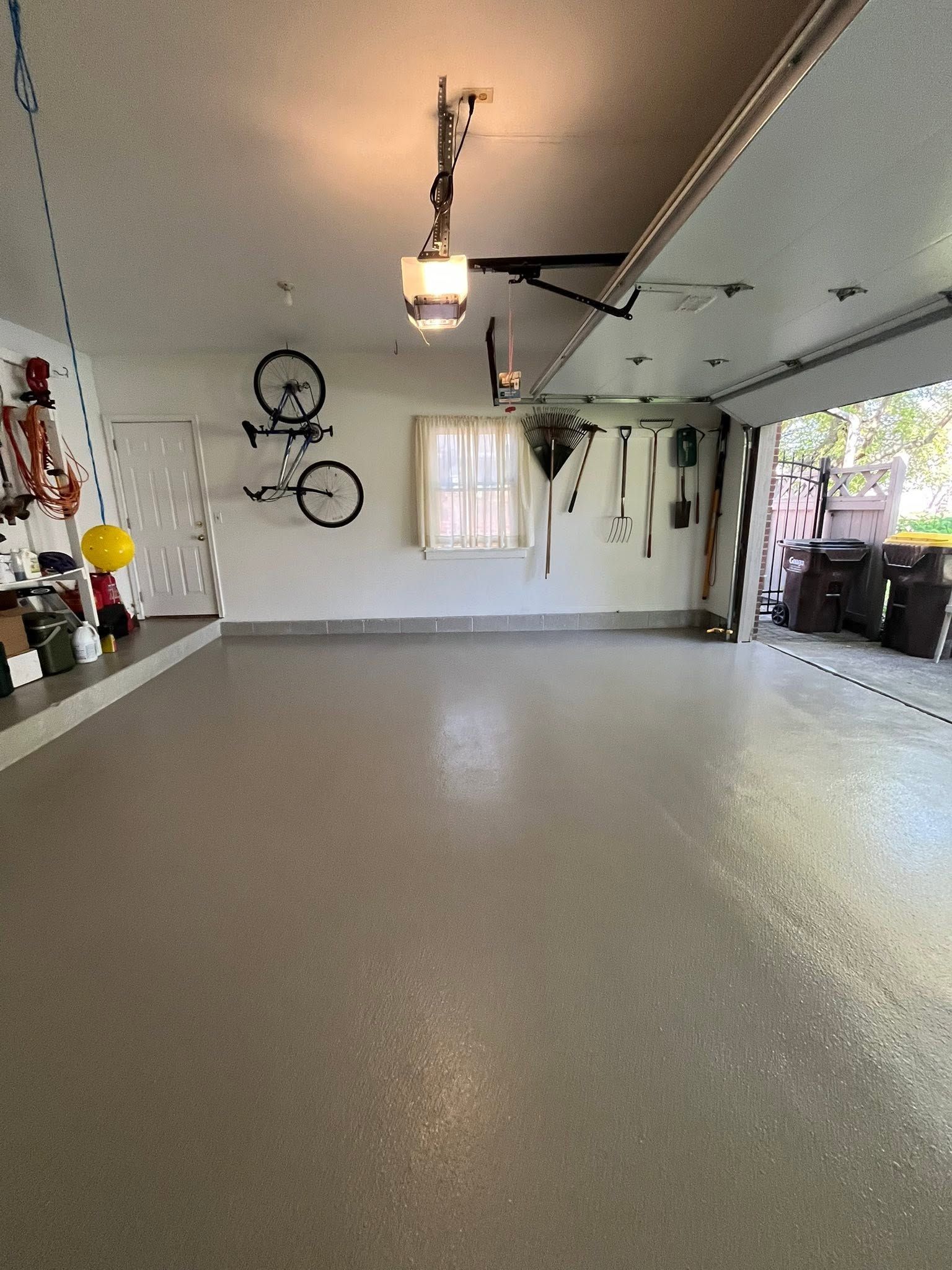
A bonded garage floor coating and a surface-applied one look nearly identical the day they are installed. The difference appears under hot tire contact, which creates a combination of heat and shear force that pulls a coating off a slab if the adhesion relies only on surface chemistry rather than mechanical keying. Grinding to an appropriate concrete surface profile removes the barrier between the resin and the slab, and the epoxy locks into the open texture rather than resting on the surface. The thickness of the coating system applied after grinding determines how the floor handles point loads and chemical exposure over time.
Once the system cures, you will see a garage floor that wipes clean after oil drips and fluid spills rather than absorbing them into the concrete, shows a consistent finish without the patchy adhesion failures that appear as bubbles or flaking edges, and holds its appearance under regular vehicle traffic without the scuffing and tire marks that appear on thinner products within the first season. The decorative chip or color broadcast, if selected, is sealed beneath the topcoat rather than sitting exposed on the surface.
Liquid Flooring, LLC has been in operation since 2018, and the owner is licensed and fully insured. Because the owner handles jobs directly, the pre-work consultation and the installation are managed by the same person, which keeps the finish plan and the preparation sequence consistent from the first visit through the final topcoat application.
Questions Before Starting Your Project
Garage floor coating projects involve several decisions before any material is applied. The questions below cover how the work is performed and what to expect during and after the installation.
What does the concrete grinding step involve and why is it required?
A walk-behind or ride-on concrete grinder equipped with diamond tooling removes the top layer of the slab surface, exposing fresh concrete with an open pore structure that epoxy resin can penetrate and bond to. Skipping this step or substituting acid etching alone typically produces a weaker mechanical bond, and that difference becomes apparent under hot tire cycling within the first year.
How should a garage be prepared before the installation crew arrives?
Vehicles, storage items, and shelving should be cleared from the slab entirely, and any floor drains should be noted so the installer can work around them during grinding and coating. The slab itself does not need to be cleaned by the homeowner ahead of the visit, because the grinding process removes surface residue as part of the preparation sequence.
Why does hot tire pickup happen and how does a properly installed epoxy system prevent it?
Hot tire pickup occurs when a vehicle parks on a coating while the tires are still warm from driving, and the heat softens the coating enough that the tire bond exceeds the coating's bond to the concrete. A mechanically ground slab with a high-build epoxy system applied at the correct mil thickness resists this failure mode because the adhesion is stronger than what a surface-cleaned or acid-etched slab can provide.
What finish and chip options are typically available for garage epoxy floors?
Full broadcast chip systems use colored vinyl flake distributed across the wet epoxy base coat before a clear topcoat is applied. In Williamston and the broader Lansing area, chip blends in neutral or earth-toned palettes are common in attached garages, while solid colors are often selected for detached workshops or outbuildings where utility function is the priority over appearance.
What maintenance does an epoxy garage floor need after installation?
Routine sweeping and mopping with a pH-neutral cleaner keeps the surface in good condition. Concentrated degreasers and abrasive pads can degrade the topcoat over time, and point impacts from dropped metal tools can chip the surface, though high-build systems are more resistant to impact than thin-coat alternatives.
Liquid Flooring, LLC also installs garage epoxy flooring in Lansing, Okemos, East Lansing, Mason, and Howell. To set up a free quote and walk through finish options for your garage slab, call Liquid Flooring, LLC at (734) 686-9399.